


VibeFox Inside Bar MT5
30,00 €
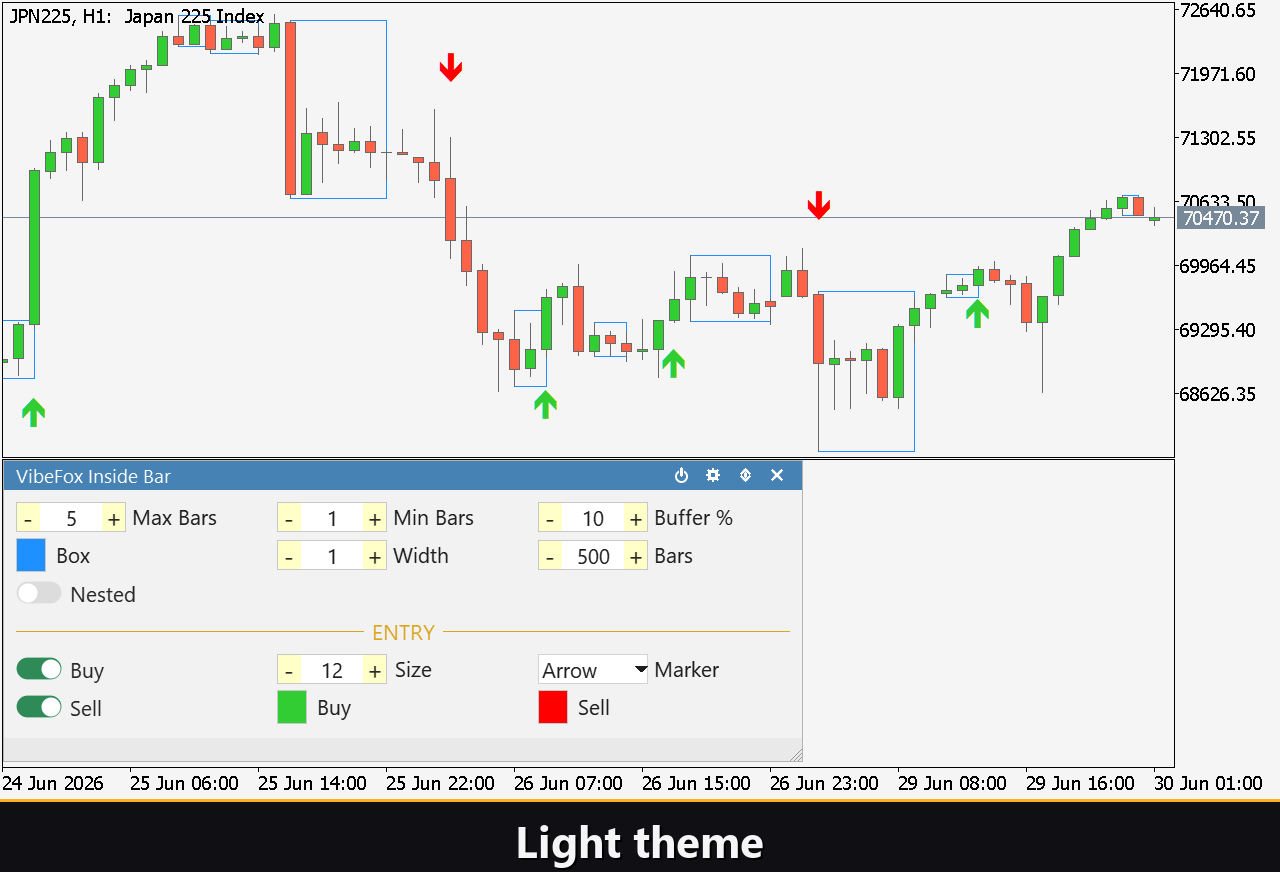
VibeFox Inside Bar is a real-time price-action indicator for MetaTrader 5. It detects the classic inside-bar pattern, draws a clean rectangle around every mother bar that contains a coil of inside bars, and marks the exact moment price breaks out of that range right on the chart. All controls are gathered into one modern interactive panel, so instead of scanning candle by candle you see each compression setup and its breakout entry the moment it forms.
VibeFox Inside Bar — mother-bar coil breakout with automatic entry points
VibeFox Inside Bar is a real-time price-action indicator for MetaTrader 5. It detects the classic inside-bar pattern, draws a clean rectangle around every mother bar that contains a coil of inside bars, and marks the exact moment price breaks out of that range right on the chart. All controls are gathered into one modern interactive panel, so instead of scanning candle by candle you see each compression setup and its breakout entry the moment it forms.
How the indicator works
An inside bar is a bar whose High is lower than (or equal to) the previous bar’s High and whose Low is higher than (or equal to) the previous bar’s Low — in other words, a bar that sits entirely inside the range of the bar before it. That previous, larger bar is called the mother bar (MB). Inside bars signal that the market is pausing and compressing: volatility contracts while buyers and sellers reach a temporary balance.
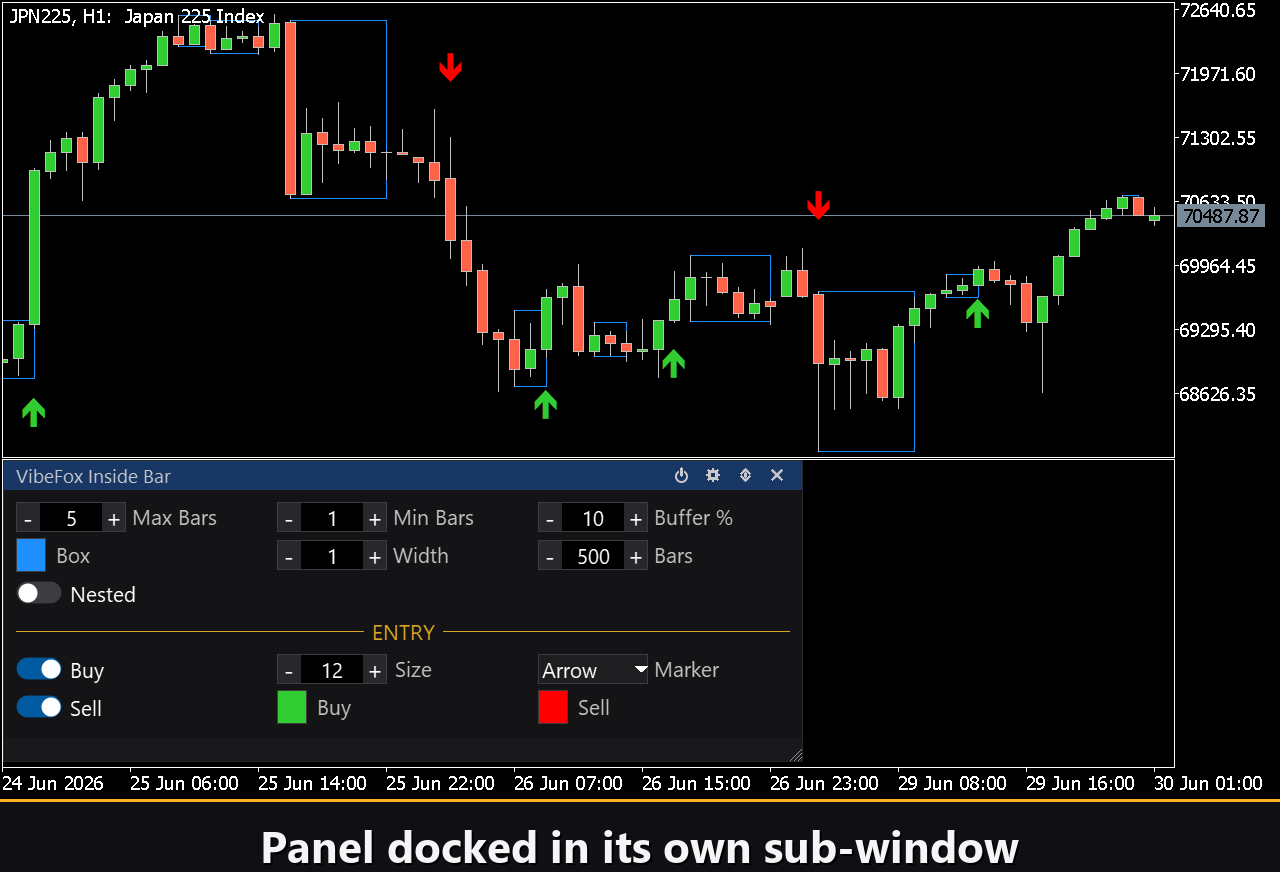
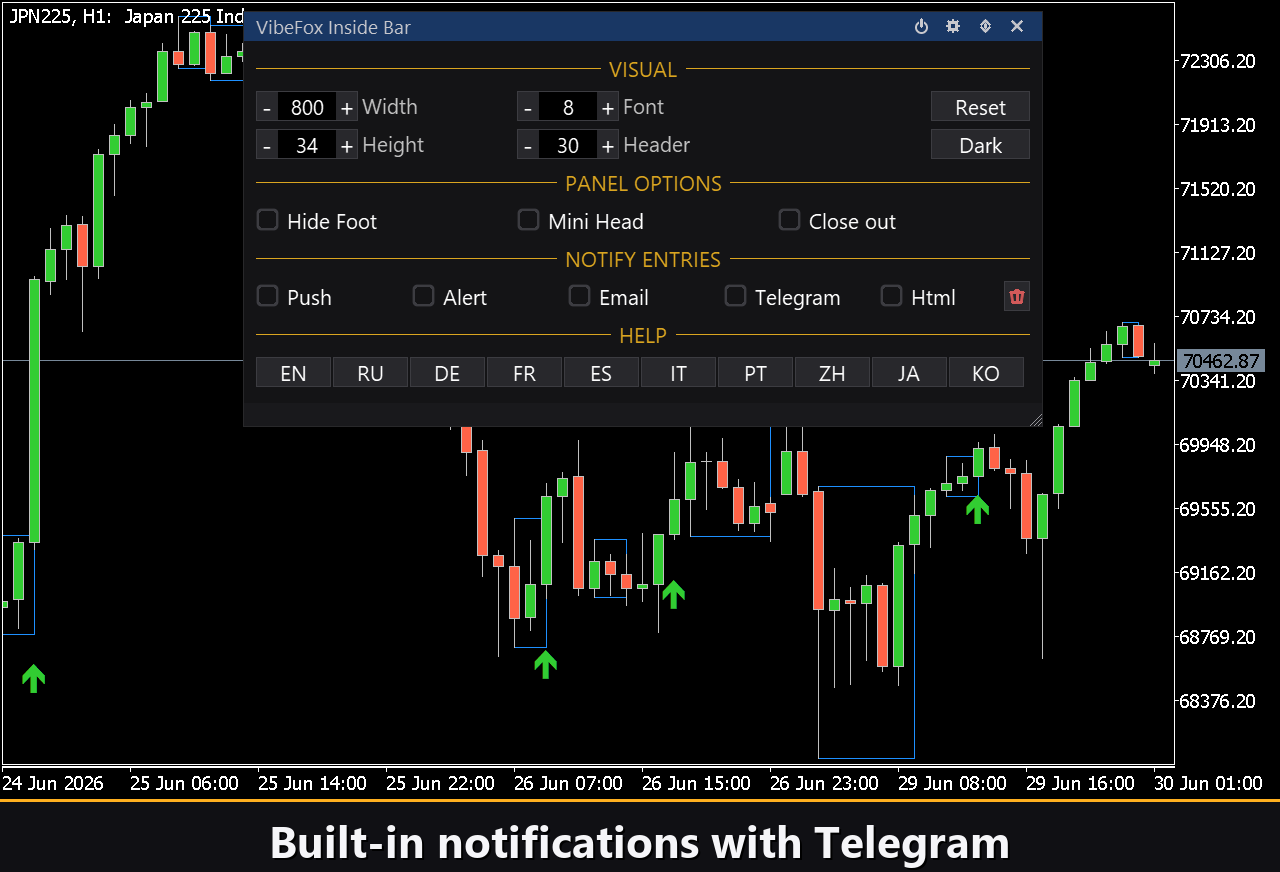
When one or more inside bars appear in a row, they form a coil — a tightening sequence fully contained by the mother-bar range. The indicator scans the closed bars, finds the mother bar (the bar before the first inside bar), and tracks the coil for as long as each following bar stays inside that same range. It then draws a rectangle spanning the mother-bar high and low across the whole coil, so the compression zone is obvious at a glance.
The Max Bars setting caps how many consecutive inside bars are accepted in a single coil (1 to 20); once that many are counted, or a bar breaks out of the range, the coil ends. The mother-bar boxes are drawn directly on the price chart as rectangle objects, while the indicator itself lives in its own subwindow where the control panel sits. The Bars setting limits how much history is processed — set it to 0 to scan all available bars, or use a smaller value for faster redraws on heavy charts.
By default every inside bar of a coil is measured against that same mother-bar range. The Nested option switches to a stricter, cascading rule: each bar must sit inside the previous bar, so the range tightens step by step and the coil ends as soon as a bar no longer fits inside its immediate predecessor — even if it would still fit inside the mother bar. The mother-bar box and the breakout buffer are still measured from the first (widest) mother bar. Turn it off to accept any bar contained by the mother-bar range.
Entry points
The main value of VibeFox Inside Bar is its automatic breakout entries. After a coil forms, the indicator watches the bars that follow and places a clear marker on the chart the moment price resolves the compression. Each direction has its own toggle.
Entry — Buy breakout
The first bar after the coil that closes above the mother-bar high places a BUY marker — the market has broken out of the compression to the upside. Buyers have won the squeeze, and price is expanding upward out of the range.
Entry — Sell breakout
The first bar after the coil that closes below the mother-bar low places a SELL marker — the compression has resolved to the downside. Only one signal is produced per setup per direction, so each coil gives at most one clean breakout call each way.
Breakout Buffer
The Buffer % setting is a noise filter expressed as a percentage of the mother-bar range. With a buffer, the close must clear the mother-bar edge not just by a tick but by that fraction of the box height before a signal fires — so a buffer of 10 means the close must push beyond the edge by 10% of the mother-bar’s own range. Because it scales with each setup’s size, the same value behaves consistently on any symbol or timeframe. Set it to 0 to take breakouts on the first close beyond the edge, or raise it to demand stronger, more decisive breaks and filter out marginal ones.
Buy and sell markers are colored separately with the Buy Color and Sell Color settings, so direction is read instantly. The Marker selector switches the glyph between a plain cross (+), filled triangles, or arrows with a tail, while the Size control scales the marker in pixels (6 to 40) to fit any chart density.
Full visual control
The mother-bar box color is set with Mother-Bar Box Color and the border thickness with Box Border Width from 1 to 5 pixels. The box and both entry markers each support a transparency setting (0-100%) in the color picker popup, so you can blend them softly into the chart background. Markers on the price chart are sized and colored independently, so entries stand out clearly against any background.
Interactive on-chart panel
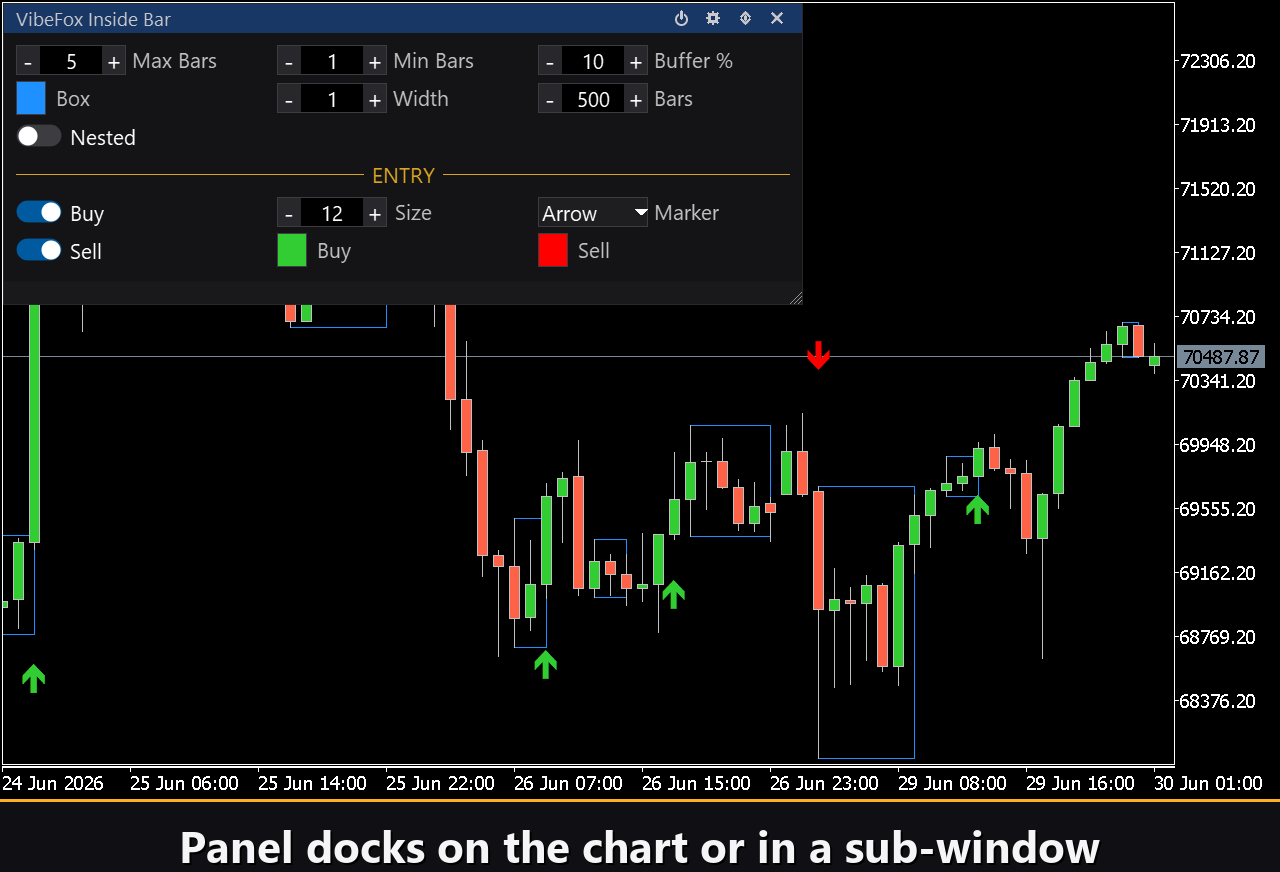
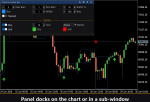
The whole interface is a smooth canvas-based panel built for fast mouse control. The inside-bar parameters are gathered into tidy rows, and the entry block is set apart with its own gold ENTRY heading, so signal settings do not get mixed up with box settings. The panel header holds the control icons.
Power — turns the drawing of entry markers on and off without removing the indicator from the chart.
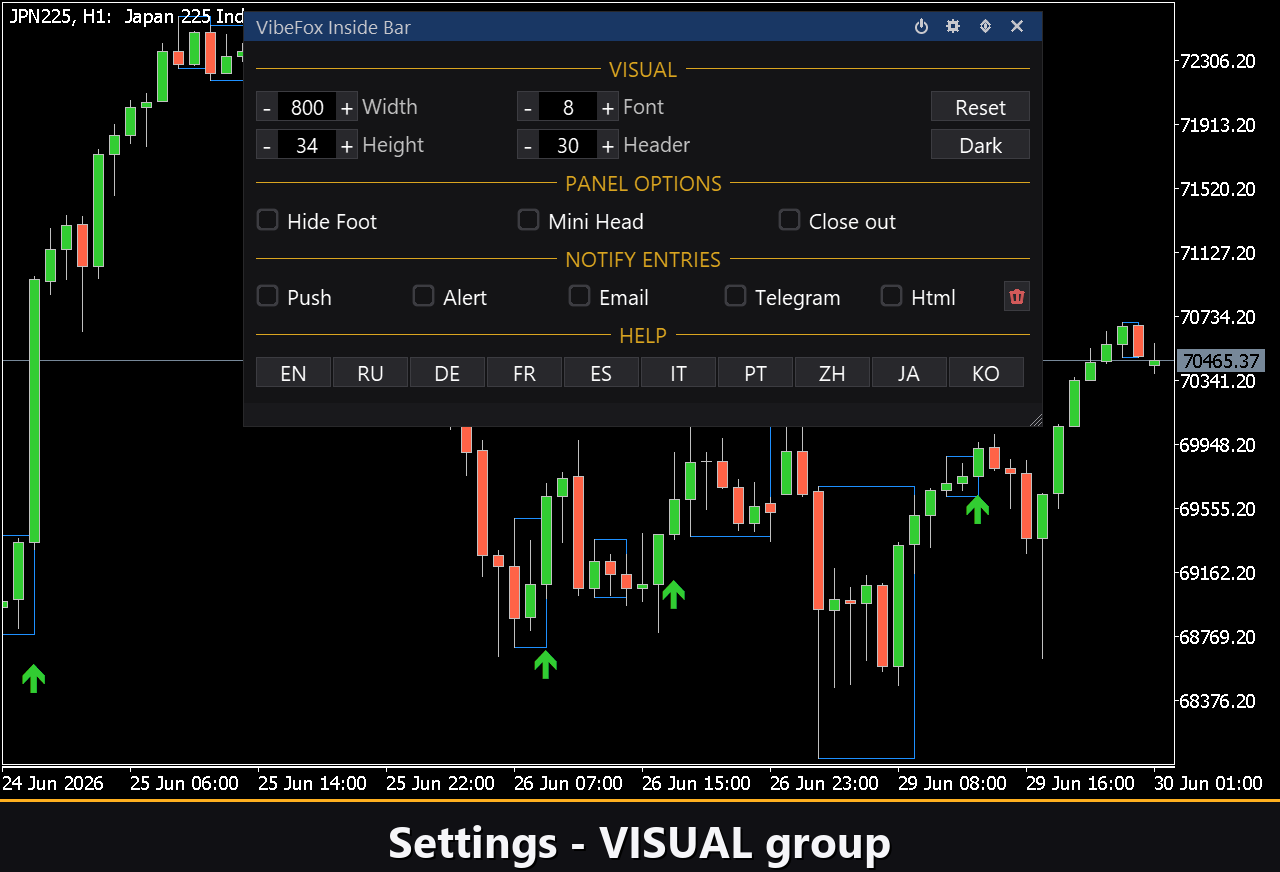
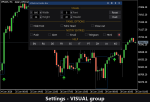
Settings (gear) — opens and closes the settings section.
Updown (arrows) — moves the panel between its subwindow and the main chart.
Close (cross) — closes the indicator.
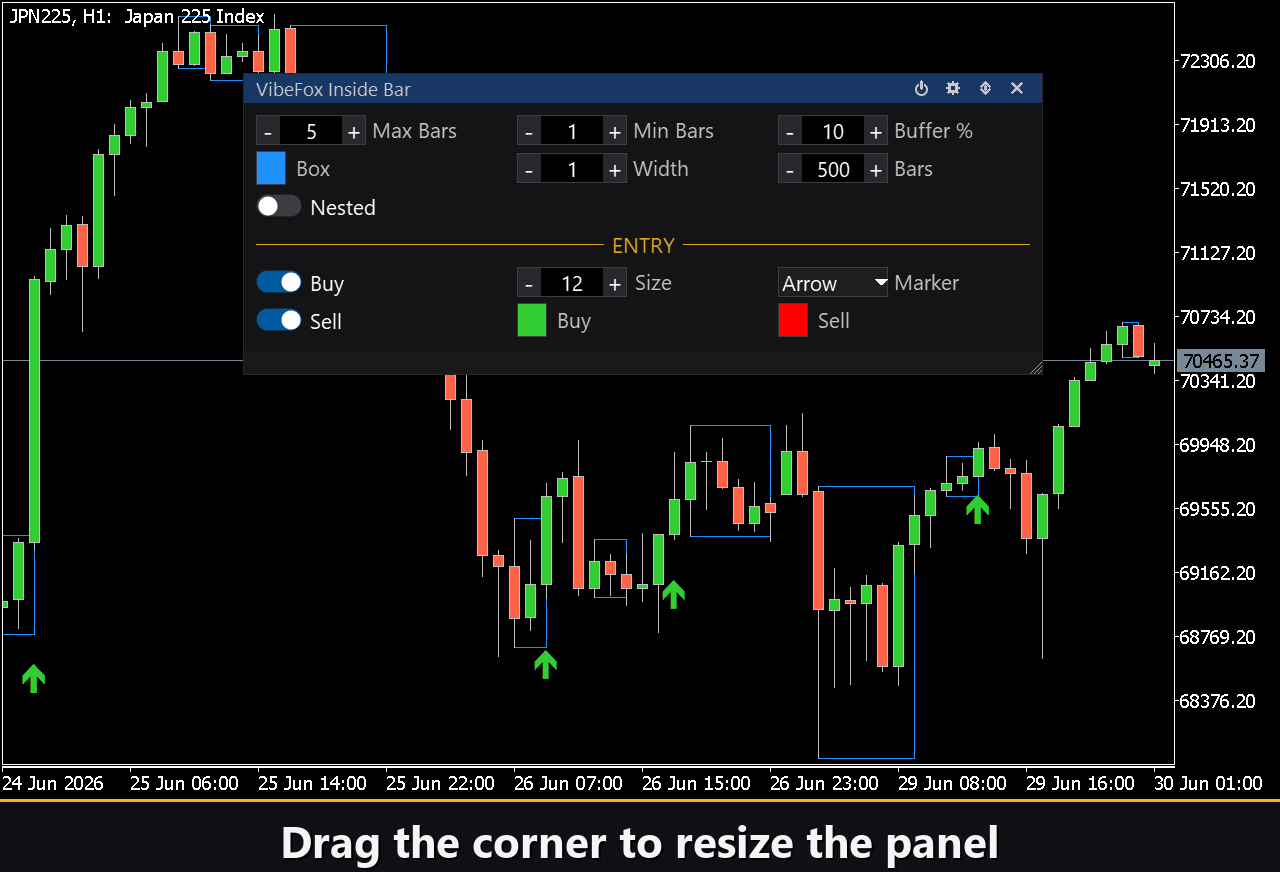
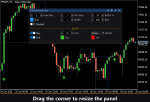
Resizable — drag the bottom-right corner to scale the panel.
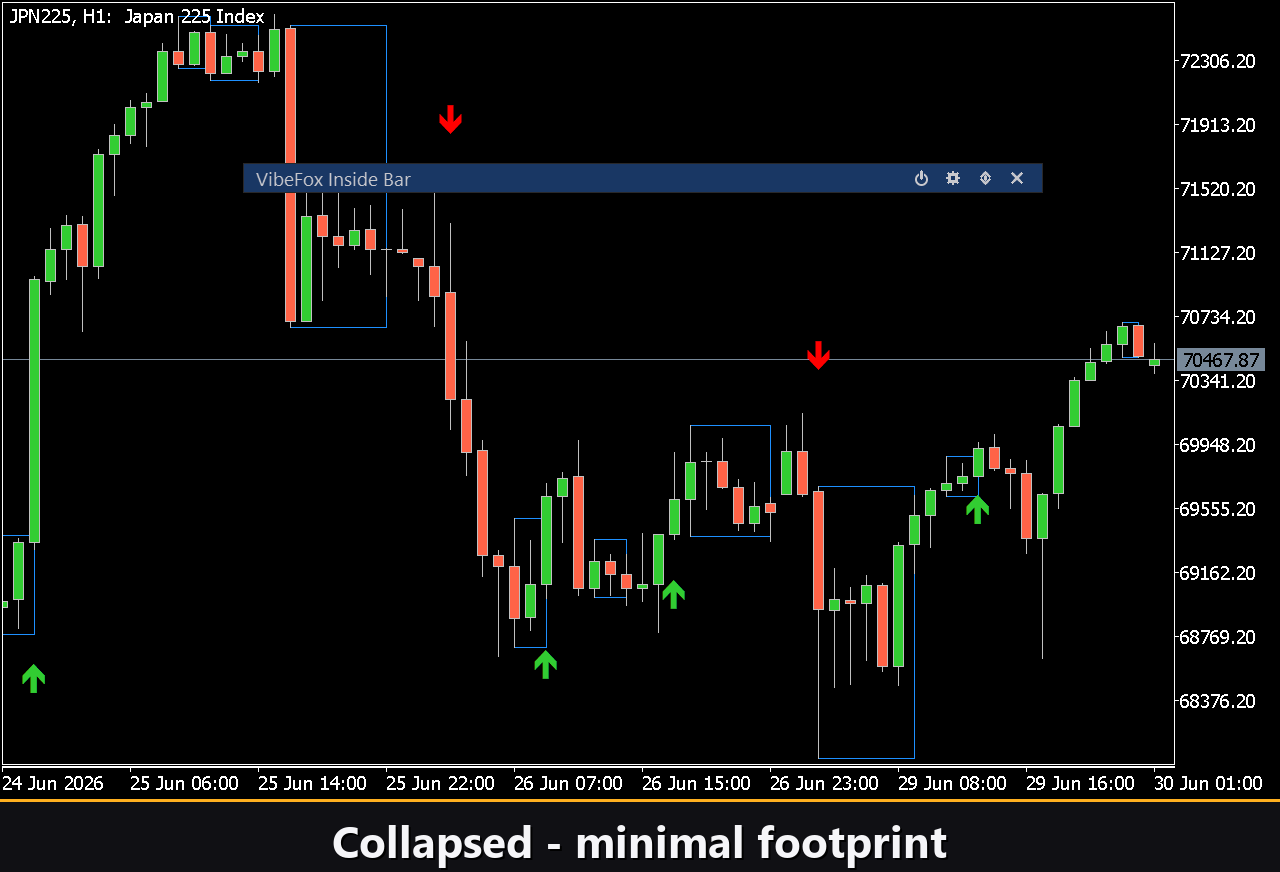
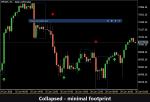
Collapsible — a double click on the header collapses the panel into a compact strip.
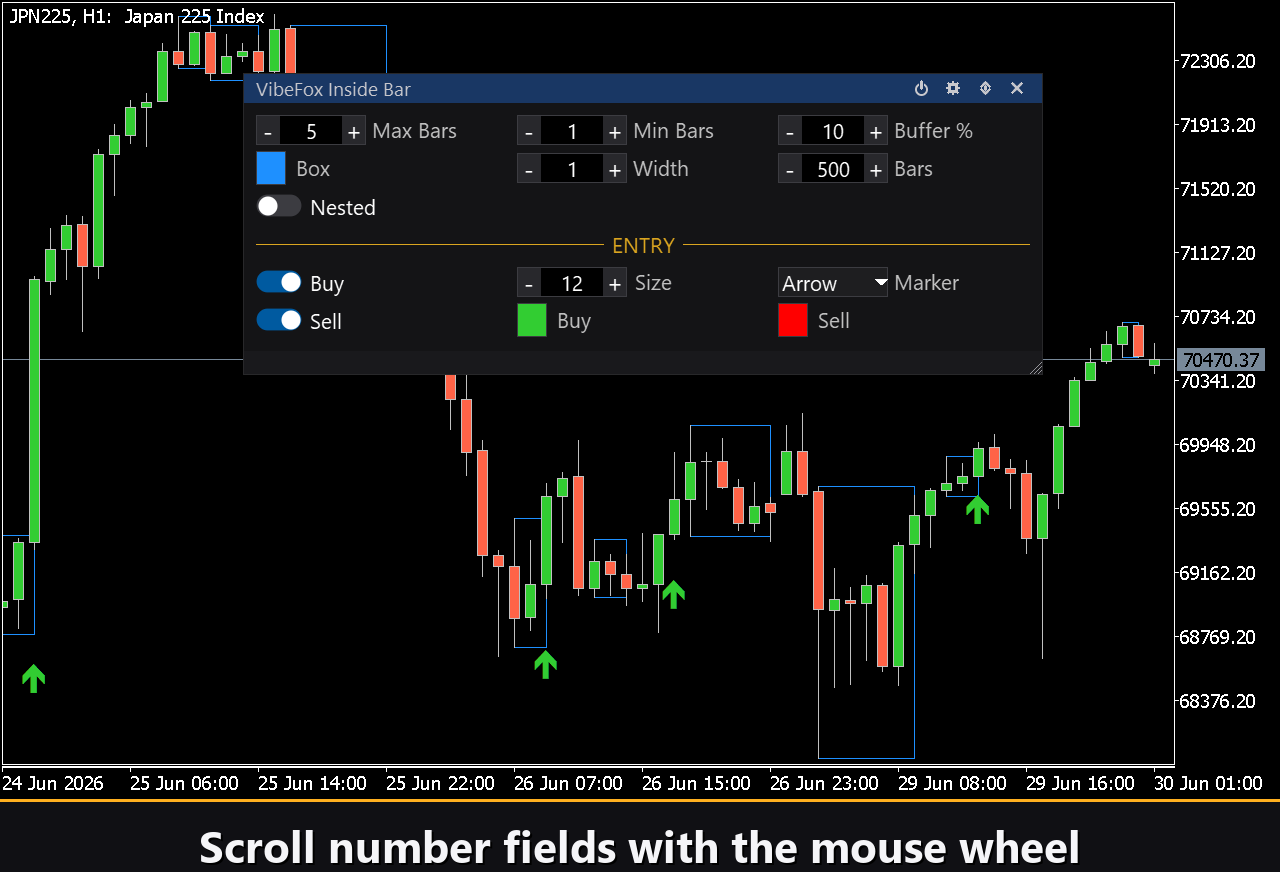
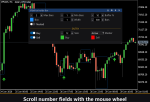
Mouse wheel — hover over any numeric field and scroll the wheel to change the value without opening the keyboard.
Settings and personalization
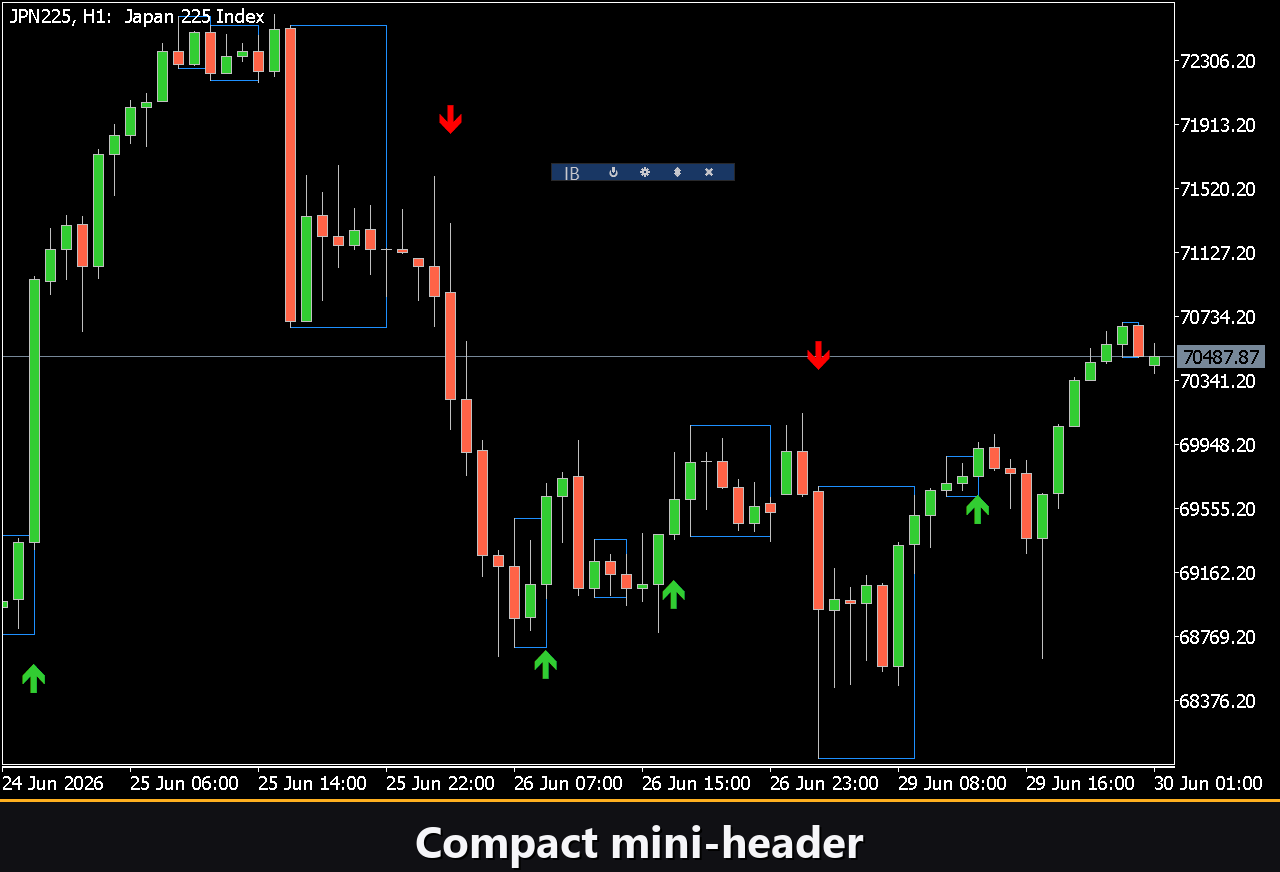
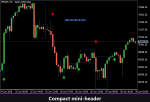
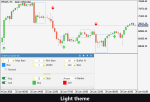
The Settings button opens a section where the panel is fitted to your workspace: a light, dark or automatic Theme, an adjustable panel width, header size, row height and font size. Extra touches let you hide the bottom bar via Hide Footer, shrink the header when collapsed with Mini Header, and automatically collapse the panel on a click outside it. Almost every parameter changes live right on the panel — the input fields on the Inputs tab only set the starting values. You can also run several independent copies on one chart by giving each a unique Instance, to compare different inside-bar settings side by side.
Entry notifications
You do not need to sit and guard the chart waiting for a breakout. Each entry can be sent through several notification channels that are enabled independently right on the panel.
Alert — a pop-up message inside the terminal.
Push — a mobile notification to the MetaTrader app on your phone.
Email — a letter sent through the terminal’s mail settings.
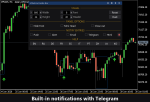
Telegram — the alert text together with a chart screenshot, sent straight to your Telegram chat.
Enable only the channels you need, and you will be notified the moment a new breakout appears on the symbol and timeframe you are working with.
Visual history (HTML report)
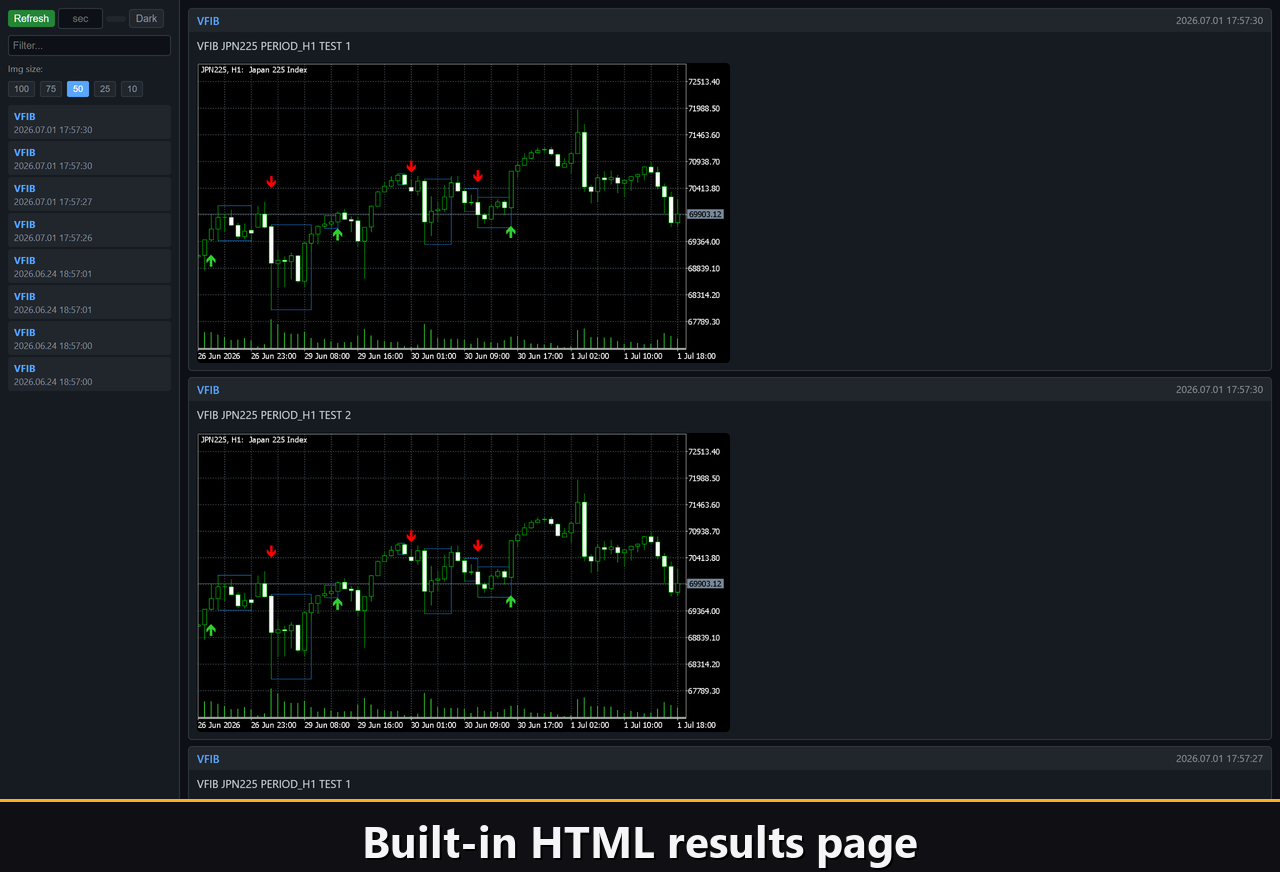
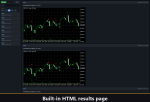
Enable the Html channel, and every entry signal is saved to an HTML report together with a screenshot of the chart at the moment it fired. The report is stored in the terminal’s Files folder, in the VibeFox_Inside_Bar directory (MQL5/Files/VibeFox_Inside_Bar/result.html), and opens in any browser — you get a visual log of all the breakouts the indicator found. A one-click trash button clears the report and its screenshots whenever you want to start over.
Telegram Alerts
Signals can also be delivered straight to your Telegram chat — the alert text together with a screenshot of the chart at the moment of detection. Turn on the Telegram channel and enter your bot token and chat id in the inputs.
Delivery rides on the HTML report: each new signal is written into the report, and the report — opened in a browser — forwards it to your Telegram chat on its own. For this reason, enabling Telegram automatically keeps the Html report on, and the two channels work together.
Built-in multilingual help
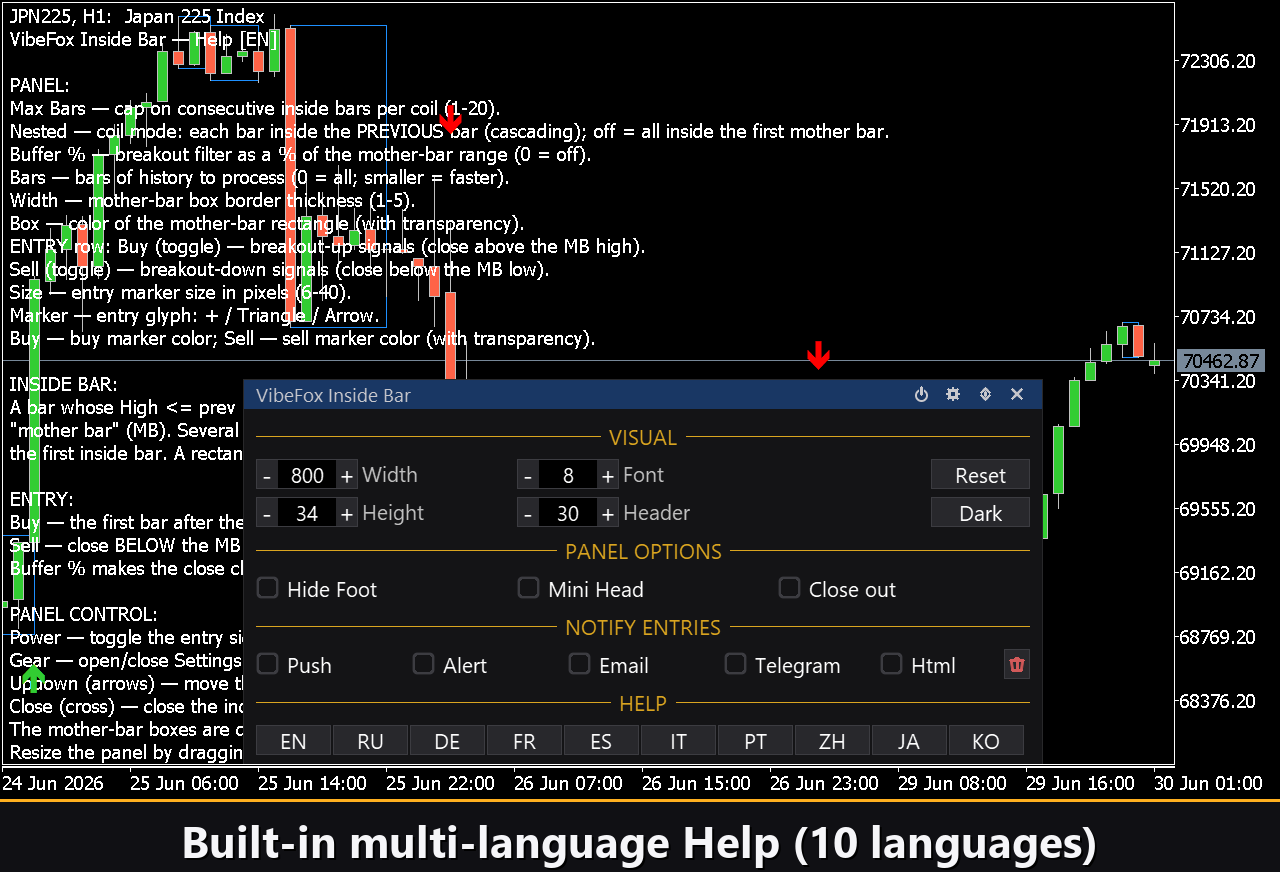
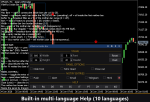
A full help page is built into the panel, available in multiple languages, so every control is explained right where you use it.
Loading...